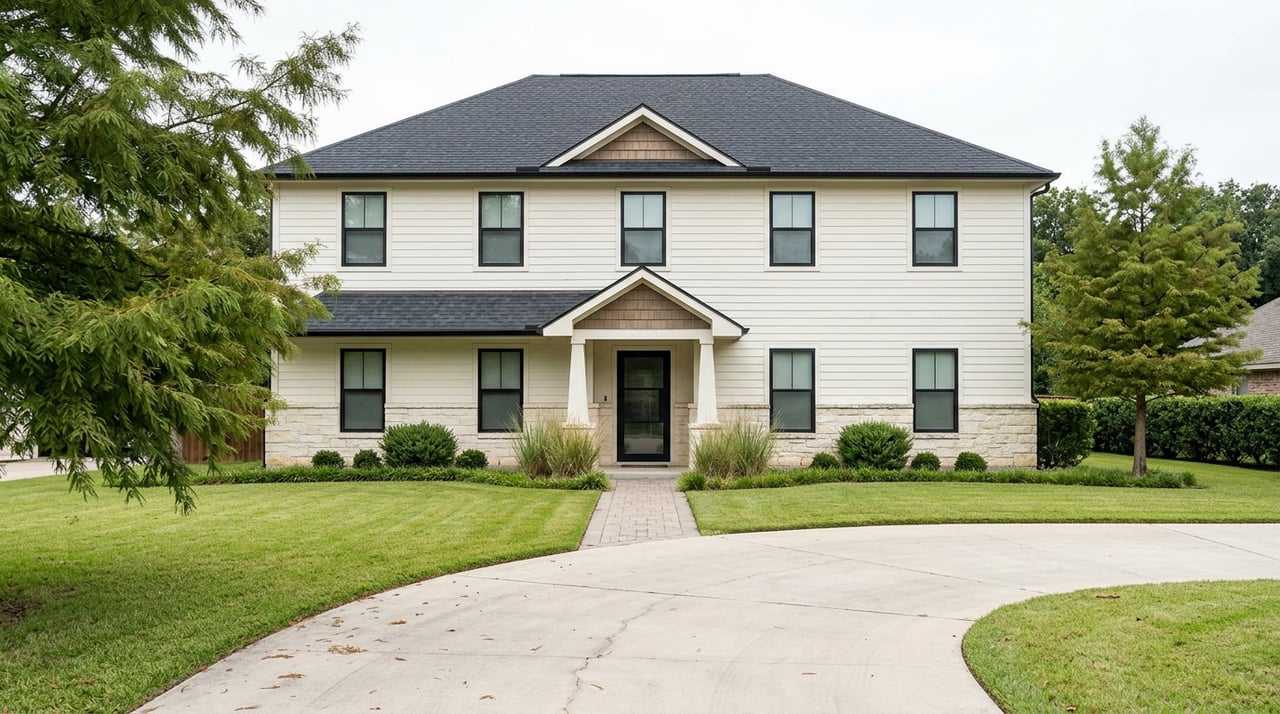
The Three Numbers Your Prosper Builder Never Shows You Together
August 27, 2026
August 27, 2026
You sit down at the design center table. The sales counselor slides over a printed rate sheet, taps a number, and says some version of "this is the best we've offered all year." Right now in Prosper, that number might be a first-year rate of 3.99 percent on a 30-year fixed loan, the kind of 2/1 buydown Toll Brothers was advertising on quick move-in homes as recently as this month. It might be a five-figure closing credit. Whatever the number is, it's real, and it's designed to be the only number you remember on the drive home.
It's also one line out of four. The other three, a lot premium that isn't on the price sheet, the financing structure that pays for the "free" rate, and the tax bill that resets the January after you move in, rarely appear on the same page. Two buyers can sign contracts that look identical on the surface and end up with meaningfully different real costs, not because either one negotiated poorly, but because nobody laid out all four lines at once.
Builder incentives in Prosper right now are genuinely sizable. First Texas Homes ran a promotion in July offering up to $20,000 toward contracts that closed within 60 days, a useful example of the scale builders were working with this summer even though that specific window has since closed. Toll Brothers' current advertised first-year rate reflects a 2/1 buydown program, a structure where the rate is bought down 2 percentage points in year one and 1 point in year two before reverting to the full note rate. Industry pricing data on Texas new construction puts a typical incentive package, combining a buydown with closing cost credits, at roughly $8,000 to $35,000 in value depending on the community and price point.
None of that is fiction. It's just incomplete. A temporary 2/1 buydown on a $350,000 loan costs the builder something like $8,400 to fund. A permanent buydown of one discount point, worth about a quarter-point off your rate for the life of the loan, runs closer to $3,500. Those figures matter because they tell you what the incentive is actually worth in dollars, which lets you check whether the builder's version beats shopping the loan yourself.
Here's the part most buyers skip. Builders commonly tie their best rate programs to an in-house or preferred lender, and that lender's pricing isn't always independent of the incentive. If the base price or the design center allowance is set slightly higher to make room for the "free" buydown, the incentive is real, but it isn't free. It's a transfer from one line of the contract to another.
The fix is simple and it costs you nothing to ask for: get a written quote from an outside lender for the same loan amount, then ask the builder to show you the price of the home with and without their financing package attached. If the two numbers land close together once you account for the buydown's dollar value, the preferred lender is competitive. If they don't, you're paying for the incentive somewhere else in the contract.
The second line most buyers never see itemized is the lot premium. Greenbelt lots, corner lots, cul-de-sac lots, and lots with a water or amenity view routinely carry an add-on above the base floor plan price, and that add-on is priced per homesite rather than published on a general rate sheet. Windsong Ranch's Preserve at The Fields section, for instance, has marketed an 11,338 square foot lot backing to greenbelt as a premium homesite built by Bella Custom Homes, the kind of listing that makes the premium visible only once you're already looking at a specific address.
The premium itself isn't the problem. The problem is that it's negotiated separately from the incentive conversation, on a different day, sometimes with a different person at the sales office. Ask for the lot premium in writing before you select a homesite, not after you've already fallen in love with the view.
This is the line that catches the most buyers off guard, because it doesn't show up until well after closing. Texas values property as of January 1 each year. If your home is still under construction on that date, the county assesses it at a lower incomplete-improvement value. Once the home is finished and occupied by the following January 1, the county reassesses it at full market value, and that new number is what shows up on your next tax bill.
Collin Central Appraisal District mailed its 2026 Notices of Appraised Value on April 15, with a protest deadline of May 15 for anyone who wants to challenge the new number. That timeline matters because it means your first partial-year tax bill on a new build almost always understates what you'll actually owe once the reassessment lands.
There's a second wrinkle specific to Prosper. The town straddles the Collin and Denton county lines, and the two sides don't tax alike. Collin County property records put Prosper's median effective tax rate at roughly 1.47 percent for the current tax year, while Denton County property records for Prosper show a median effective rate closer to 1.94 percent, driven partly by differing Municipal Utility District structures across subdivisions. Two homes that look identical on a listing sheet can sit on opposite sides of that line, which means they start from different tax baselines before anyone adds a PID assessment on top. We've written before about how carrying costs diverge between Windsong Ranch, Star Trail, and Whitley Place for exactly this reason, and the county line is one more variable stacked on top of that comparison.
The one lever that softens the reassessment is filing your homestead exemption on time. The exemption removes $100,000 from your school district's taxable value, worth roughly $1,400 a year on a median-priced new build, but it has to be filed with the county appraisal district by April 30 of the year after you close. Miss that date and you carry the full assessed value through the next cycle, losing nearly the entire first-year benefit. Collin County's Tax Assessor-Collector office takes the application at no cost, and it's worth putting the deadline on your calendar the day you sign, not the week you move in.
A short list worth bringing to your next builder meeting:
None of these four lines is hidden in the sense of being concealed. They're published, filed, or available on request. What's missing is the habit of putting them on the same page before you sign. The rate on the whiteboard is one input. The lot premium, the financing structure behind the incentive, and the tax basis that resets the year after closing are the other three, and they're the ones that determine whether two "identical" Prosper contracts actually cost the same thing.
Is a builder's rate buydown always tied to a preferred lender? Not universally, but it's common enough that you should ask directly. If the buydown requires the builder's in-house or preferred lender, get an outside quote on the same loan terms so you can compare the true cost of financing, not just the advertised rate.
How much does a lot premium typically add? It varies by lot type and community rather than following a published formula. Greenbelt, corner, cul-de-sac, and view lots are the categories that most often carry an add-on. Ask for the number in writing before you select a homesite.
What happens if I miss the April 30 homestead filing deadline? You lose nearly the entire first-year benefit, roughly $1,400 in annual savings on a median-priced new build, because the $100,000 reduction in taxable value only applies once the exemption is on file. There's no cost to file, so the only real risk is forgetting the date.
If you're weighing a builder contract in Prosper this fall and want someone to walk through all four lines with you before you initial anything, Patricia Weidler works new construction across Prosper's master-planned communities and can help you read a builder's numbers the way they're actually structured, not just the way they're presented.
As your trusted guide, you're not just acquiring a property; you're uncovering a home that encapsulates your dreams and aspirations.